Search

Cooking With Game

Use the Venison, Elk, Duck and Fish that hubby brings home, in family friendly recipes.

Cheddared Elk Steak

Cheddared Elk Steak
Serves 6 to 8

4 pounds elk steak cut about 1 1/4 to 1 1/2 in thick
flour
salt and pepper
1/4 cup oil
14 oz can chopped tomatoes (or about 2 cups chopped tomatoes)
2 medium onions, sliced
I cup (or more) grated Cheddar cheese

Poke steak with tenderizing fork. I use a many pronged, spring loaded ones. Season steaks with salt and pepper, then pound flour into the meat on both sides. This is a messy, but necessary step. I sprinkle the flour on the meat, then use a kitchen towel held above it while pounding in the flour with a toothed mallet to try to keep the flour from going all over. Shake off the excess. Brown the meat in the oil, then remove and set aside in 9 x 13 casserole dish. Add the sliced onions to the same skillet and saute slowly for 5 or 6 minutes, stirring occasionally. Lift the meat to lay some onions under it, then put the rest on top with a little more salt and pepper if desired. Break the tomatoes up with a fork (mash around in the can) then pour over meat and onions, cover with foil and bake at 275 or 300 for 2 or 3 hours, or until tender. (This is best done the day before, then refrigerated, then reheated before serving.)
Before serving, remove the meat and slice. Pour off some, not all of the liquid. Put the meat back in the casserole. Cover with the grated cheese and return to oven long enough to melt the cheese.
To prepare ahead of time: This is best in flavor and in texture if done a day ahead (except for the cheese topping) and reheated the following day as above.
To freeze: Yes, by all means, this freezes, but don’t add the cheese topping. Add that just before serving.
Other meat that works well is: Swiss or round steak.
Brining Duck and Goose

To make wild duck, like Mallard, Shoveler (Spoonie), Pintail, Widgeon or Ringneck taste less gamey, I brine them overnight (or do the morning before cooking), in a solution of water, salt and sugar. Approximate amounts would be 8 cups of water, 1/4 cup table salt and 2 tablespoons sugar. You need enough water to fully cover the bird. Cut the amount in half if you are just doing one or two birds. You can put it all in a large glass dish, or in plastic bags, but if you use the bags, put them in a dish because they may leak. Warm a small amount of water using the microwave, then add the sugar and salt and stir to dissolve – then add the rest of the water. Pour the mixture over the birds. Let sit in the refrigerator over night or for 8 hours. Before cooking the meat, rinse in cool water to remove salt residue and pat dry.

You can look up brining and find a lot of different information. Brining can make the meat taste too salty for some. The amount I use (stated above) accommodates my husband’s tastes. He doesn’t like the food too salty. A saltier mixture will make the meat moister (or so the experts say), but my goal is not to make the meat moist, but to make it taste “cleaner” and less gamey. It may indeed add some moisture to it as well.
There is also the issue of which salt to use. I use regular ‘ol table salt. Remember, my whole outlook is keeping it uncomplicated, making it easy and ending up with something a family would eat.

Here is some information about salt I found at this web site:
http://www.virtualweberbullet.com/brining.html
Which Salt To Use
Kosher salt and table salt are the most common salts used in flavor brining. I use kosher salt most of the time because it dissolves quickly and it’s what most professional cooks use in their kitchens, but I also use table salt on occasion.
Sea salt can be used for flavor brining, but it tends to be quite expensive. If you have a cheap supply available, go for it; otherwise, stick to kosher salt or table salt.
Some people say that kosher salt tastes "cleaner" than table salt because it does not contain the anti-caking agents added to table salt. Some people prefer non-iodized table salt over iodized table salt, believing that potassium iodide creates an off-taste. However, these flavor differences melt away when salt is diluted in water.
In an article about salt in the September/October 2002 issue of Cook’s Illustrated magazine, taste testers felt that "all nine salts tasted pretty much the same" when dissolved in spring water and chicken stock, whether it was $0.36/pound iodized table salt, $0.66/pound kosher salt, or $36/pound Fleur de Sel de Camargue sea salt from France.
Salt Equivalent Measures
Table salt and kosher salt do not have the same saltiness in a flavor brine when measured by volume–but they do when measured by weight.
Table salt weighs about 10 ounces per cup, while kosher salt weighs 5-8 ounces per cup, depending on the brand. If using kosher salt in a brine, you must use more than a cup to achieve the same salt flavor you would get from a cup of table salt.

Bacon Wrapped Marinated Sturgeon


Bacon Wrapped Marinated Sturgeon 

1 pound sturgeon sliced into pieces about 3/4” thick
1/2 pound bacon *

Marinade:
1/4 cup olive oil
1/4 cup low sodium soy sauce
1 clove garlic minced or smashed
1/4 teaspoon garlic salt
1/2 Tbs. lemon juice

Place fish pieces in a plastic bag. Pour in the marinade. Seal and mix well.
Place in refrigerator for 2 hours.

Remove fish from bag and let marinade drain off, but do not rinse. The flesh will have darkened from the soy sauce, so don’t be alarmed.
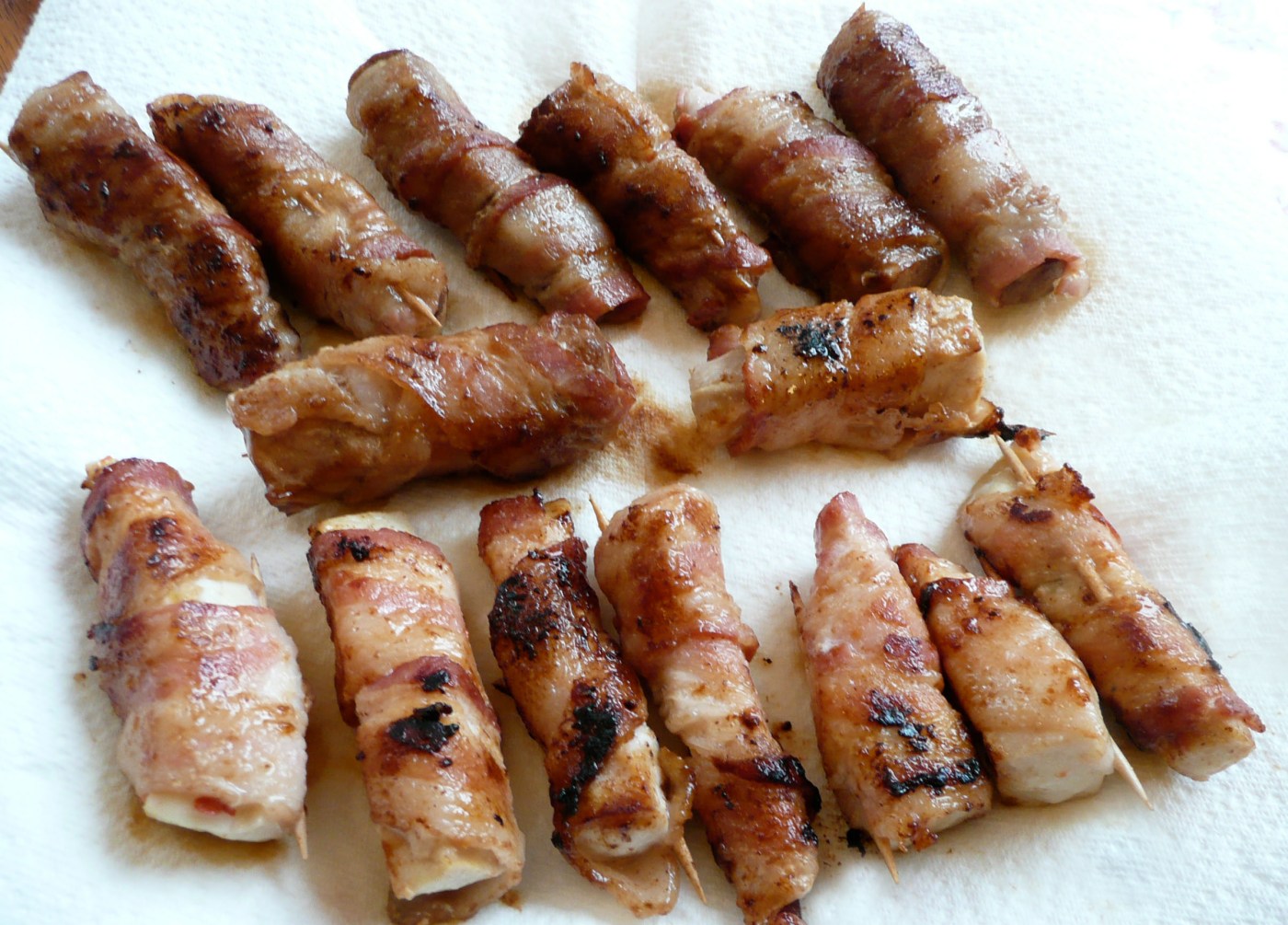
Wrap each piece in bacon and secure with a toothpick.
Fry in a very hot pan until the bacon gets cooked *, turning often.
Remove from pan to paper towel lined plate.

*The bacon will just barely be cooked, in order to not overcook the fish. If you want crisper bacon, place the bacon on a baking sheet and cook in the oven at 400 degrees until it is partly done, but is still flexible enough to easily wrap around the fish. This also removes some of the bacon fat, but does add an extra step and an extra pan to wash!


Bacon Wrapped Fingers                               In the Pan

Pan Fried Sturgeon Sticks

Sturgeon Stick gg

Continue reading “Pan Fried Sturgeon Sticks”

About Me

These recipes for preparing Elk, Duck, Goose, Salmon and Sturgeon are geared toward the average cook (who would actually like to serve this food to the family and have them eat it!). I am not a chef — certainly gourmet does not describe me.  I am just a woman whose husband loves to hunt and fish. A lot!

It has taken me years to figure out how to use the game filling our freezer. Countless game-oriented websites and cookbooks focus on grilling everything, cooking the meat to death, or turning it into sausage.  Since there’s only so much sausage one can eat, I’ve focused on integrating game into everyday cooking.  Why not find a way to make game more than barely edible?  And why not have a little fun in the process?

You will find the tips and tricks I’ve learned in “Tricks of the Game”.  The “Winging It” section will focus on recipes I am trying, but haven’t worked out yet.

My husband feels very strongly that it is important to be an honorable hunter and that we should be grateful for the meat and fish he brings in. I will admit there are times that I would like to “chuck” it. Then I remember that it is a freezer full of something good to eat, if only I would get creative and make it so. I hope you agree that the results are worth the effort!


Blog at WordPress.com.

Up ↑